
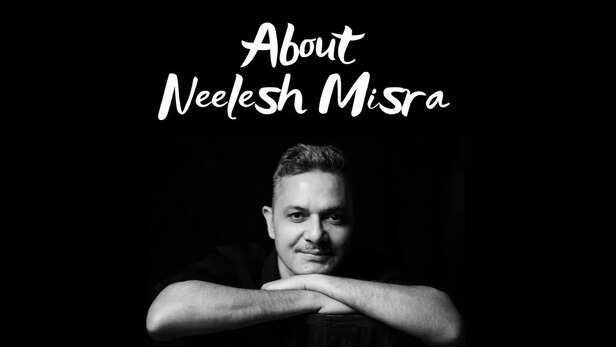
Indias most loved storyteller
Through Yaadon Ka Idiotbox with Neelesh Misra on 92.7 BIG FM, Misra did something almost no broadcasters had dared to do. He slowed the radio down. He built a fictional town called the Yaad Sheher, and over time, Yaad Sheher became real for hundreds of millions of his listeners. It became a place they returned to. A place that felt familiar. And a place that listened back.
But Neelesh Misra is more than just the voice behind Yaad Sheher.
A journalist shaped by the ground, a lyricist driven by emotion rather than trend, and an entrepreneur who builds institutions, not brands, Neelesh Misra has worked across newsrooms, conflict zones, radio studios, recording studios, film sets, villages, and classrooms. Across all these worlds, what he has always remained is an attentive listener and, at his core, a storyteller.
Early Life: Growing Up Between Schools and Villages
Neelesh Misra was born on 4th May, 1973 in Lucknow, Uttar Pradesh. His early education took place in Nainital, where he studied till Class 10 at St. Joseph’s College, followed by a period at Sainik School, Rewa, before returning to Lucknow to complete his higher secondary education at Mahanagar Boys’ Inter College.
His childhood moved between classrooms and the countryside, between structured schooling and the lived realities of rural India. His parents, Dr. Shiv Balak Misra and Mrs. Nirmala Misra, ran a school, which had actually been a determined dream for years, in a village near Lucknow called the Bharatiya Gramin Vidyalaya. The school was not just an institution; it was a way of life.
From an early age, Neelesh saw education negotiated through trust rather than privilege, and dignity preserved despite scarcity. These early years quietly shaped his worldview long before journalism or radio entered his life.
After school, he moved to Delhi to study journalism at the Indian Institute of Mass Communication (IIMC), where his formal training began — though the moral compass had already been set much earlier.
Journalism: Learning to Listen Before Reporting
Before radio studios, before Yaad Sheher, before millions recognised his voice, Neelesh Misra was a reporter on the ground — learning journalism the hardest way possible: by being present.
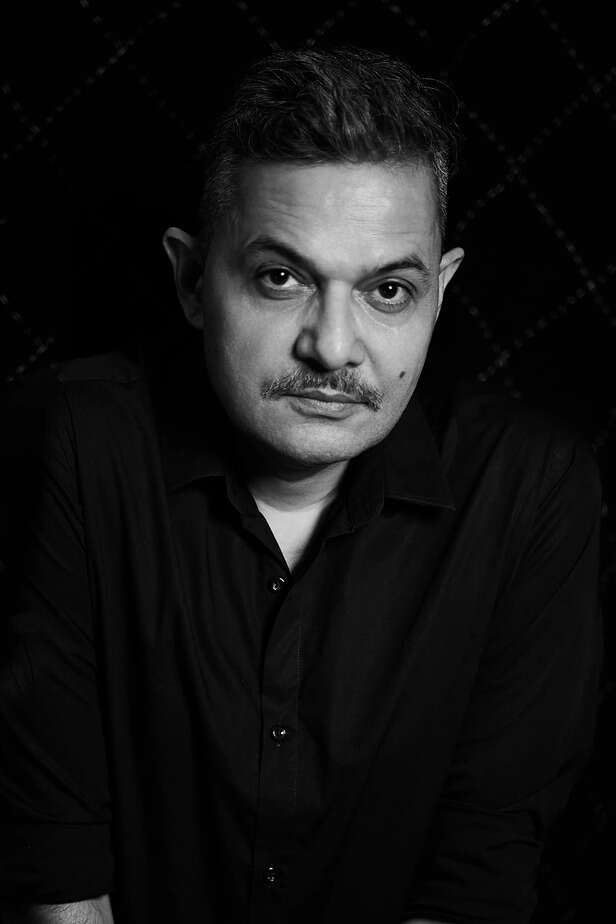
Neelesh Misra Photo by Seema Chaubey
Soon after, he joined the Associated Press (AP), one of the world’s most rigorous news organisations. It was here that his journalism was shaped decisively — through long days in the field, ethical restraint, and the responsibility of reporting history as it unfolded.
- The Charkhi Dadri Mid-Air Collision (1996)
Reporting this tragedy meant navigating grief at an unimaginable scale. Beyond official statements and aviation protocols, Neelesh focused on the aftermath — families waiting for confirmation, villages suddenly thrust into global headlines, and the systemic failures that allowed such a disaster to occur. It was an early lesson in how journalism must balance technical facts with human loss.
- The Bofors Case and Political Accountability
Covering Bofors required sustained attention to legal proceedings, political manoeuvring, and shifting narratives — often over long periods of uncertainty. For Neelesh, it reinforced the importance of patience in journalism: that some stories do not break dramatically, but reveal themselves slowly through documents, testimony, and persistence.
- Chandraswami and P. V. Narasimha Rao
These assignments required discretion and precision. The challenge lay not in sensationalism, but in untangling fact from speculation, and understanding how public trust is shaped — and sometimes eroded — by proximity between faith, politics, and authority.
- The Kargil War (1999)
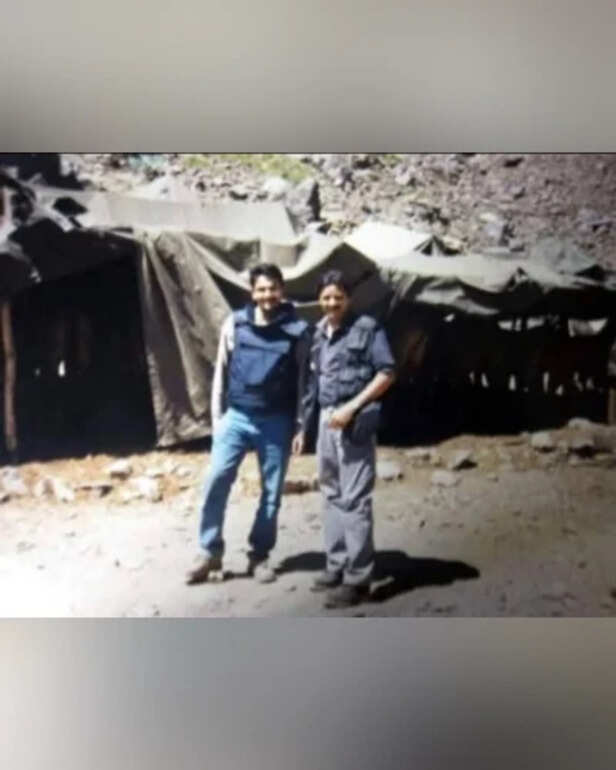
Neelesh Misra in a bulletproof jacket when he was off to cover the Kargil War
- The Odisha Super Cyclone (1999)
Reporting from disaster zones demanded endurance and empathy. Entire villages had been flattened, communication lines destroyed, and survival itself was uncertain. Neelesh’s reporting focused on relief efforts, administrative gaps, and — crucially — the resilience of people rebuilding their lives amid loss. The cyclone coverage reinforced his belief that journalism must stay with a story even after headlines fade.
- The IC-814 Hijacking (1999–2000)
The hijacking lasted 173 hours, during which passengers, families, governments, and negotiators were locked in a prolonged psychological ordeal. Neelesh followed the story closely — tracking developments, diplomatic negotiations, and the emotional toll on those involved.
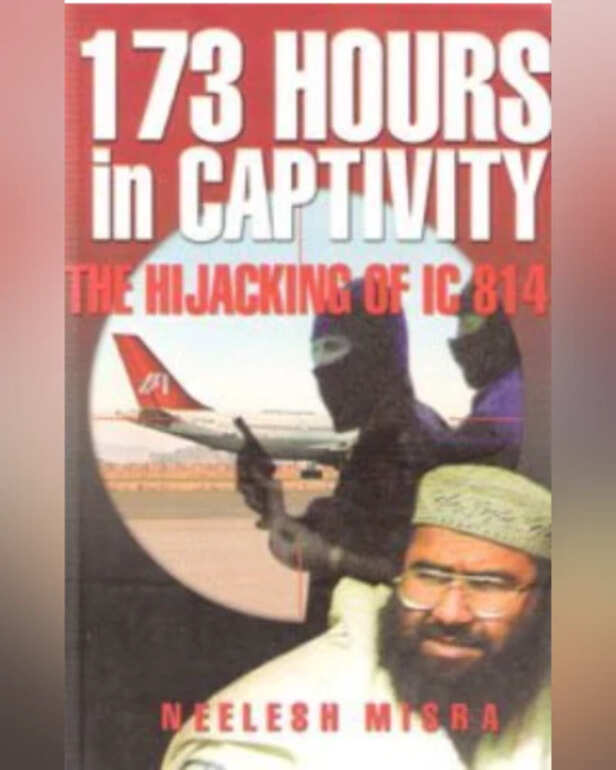
The book authored by Neelesh Misra
- The Indian Ocean Tsunami (2004)
Reporting from isolated islands posed logistical challenges — limited access, disrupted infrastructure, and immense human suffering. Neelesh’s work from the region highlighted not only the immediate devastation but also long-term rehabilitation, environmental impact, and the emotional scars carried by survivors.
- Hindustan Times: Senior Roving Editor
His stories during this phase were marked by deep fieldwork, strong narrative structure, and a focus on everyday lives often overlooked by mainstream media. This period consolidated his reputation as a journalist who combined rigour with sensitivity.
For his contributions to journalism, Neelesh Misra received:
1. The Ramnath Goenka Award for Excellence in Journalism
2. The Karpoor Chandra Kulish Memorial Award
Storytelling & Radio: Giving Hindi Its Quiet Back
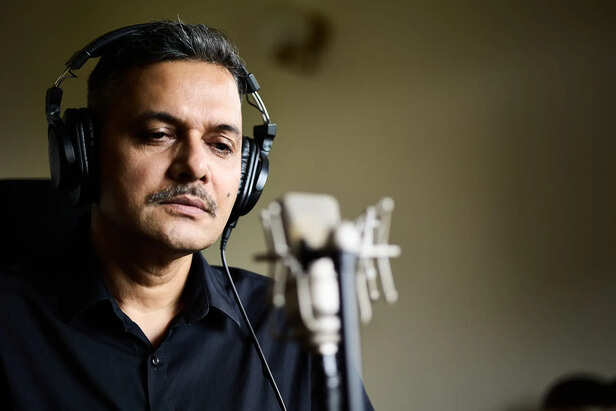
Neelesh Misra recording his stories
Long before podcasts became fashionable and long-form audio found new platforms, Neelesh Misra sensed a growing fatigue in public conversation — a world speaking too fast, performing too loudly, and listening too little. Radio, he believed, could be reclaimed as an intimate space again. Not for chatter, but for stories.
That belief found its most enduring expression in a fictional town that millions would come to call their own.
- Yaadon Ka Idiotbox (92.7 BIG FM)
At a time when FM radio in India was dominated by humour-led shows, celebrity gossip, and high-energy banter, Yaadon Ka Idiotbox made an unusual choice — it slowed down. Each episode was a self-contained short story, written and narrated in Hindi, set in a fictional town called Yaad Sheher.
Yaad Sheher was not defined by geography, but by emotion. Its characters were ordinary people — parents and children, lovers and friends, neighbours and strangers —navigating loss, affection, misunderstandings, regret, memory, and love. The stories rarely relied on dramatic twists. Instead, they lingered on moments listeners recognised from their own lives.
What made Yaadon Ka Idiotbox remarkable was not just its content, but its trust in silence — pauses, restraint, and an assumption that listeners would stay.
The show aired nightly and soon became part of hundreds of millions of people’s routines: listened to in kitchens, hostels, taxis, small shops, and even to fall asleep across the country. Over time, Yaad Sheher became a shared emotional landscape — a place listeners returned to not for escape, but for recognition.
The show ran successfully from 2011 to 2020, making it one of the longest-running and most beloved storytelling programmes in Indian radio history.

Neelesh Misra
- Yaad Sheher: From Radio to Books and Beyond
They were compiled into books:
- Neelesh Misra Ka Yaad Sheher – Volume 1
- Neelesh Misra Ka Yaad Sheher – Volume 2
The books preserved the oral intimacy of the radio stories while allowing readers to engage with them at their own pace. Yaad Sheher also expanded into:
Across formats, the essence remained unchanged — emotionally honest storytelling in accessible Hindi, rooted in everyday life.
- The Neelesh Misra Show (Red FM, 2016)
Unlike conventional radio interviews, the show blended conversation, monologue, listener engagement, and storytelling. It allowed space for vulnerability — both from guests and from the host himself — and continued his effort to create radio that listened as much as it spoke.
The show further cemented his reputation as a broadcaster who prioritised depth over noise.
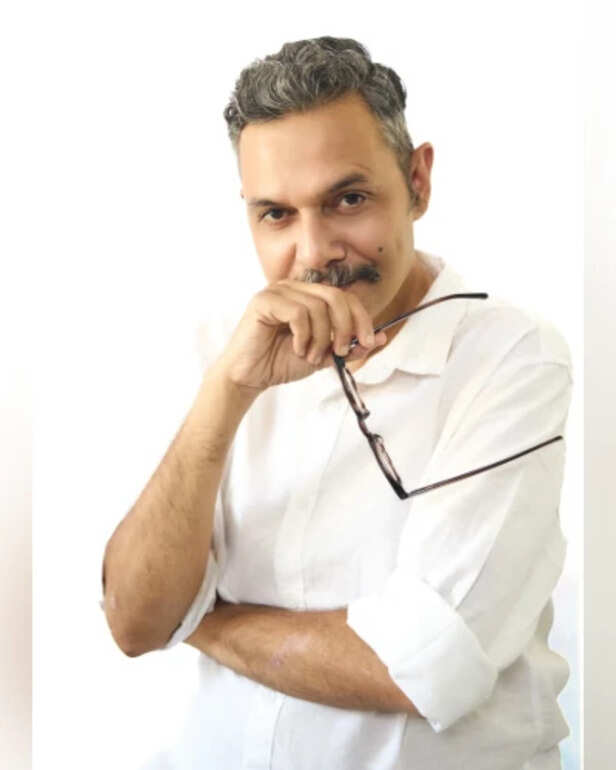
Photo by Seema Chaubey
- Kahaani Express (2018)
Unlike Yaadon Ka Idiotbox, which was authored solely by him, Kahaani Express became a platform for multiple writers, featuring stories from across India. Neelesh curated and narrated many of these stories, helping introduce new voices to a growing audio-first audience.
Kahaani Express marked an important shift — from being a storyteller to also becoming a story enabler.
Podcasts, Audiobooks & Digital Audio
As audio consumption moved beyond FM radio, Neelesh Misra ensured his work evolved with it — without compromising its soul.
His storytelling became available across platforms including:
These formats allowed his stories to reach younger audiences, diaspora listeners, and people who preferred on-demand listening — while retaining the intimacy that defined his radio work.
- Live Storytelling Performances
His live shows across Indian cities transformed solitary listening into a shared experience. These performances combined narration, reflection, music, and conversation — often blurring the line between storyteller and listener.
The live format reinforced a central idea that runs through all his work: stories are communal acts, meant to be experienced together.
- Reclaiming the Space for Hindi Storytelling

Neelesh Misras Photo Gallery
He proved that audiences were willing to slow down. That silence could be trusted. And that stories rooted in everyday life — told honestly — could travel far.
Long before “long-form” became a buzzword, Neelesh Misra had already built a city of stories, one evening at a time.
Lyricist: Stories That First Found Their Voice in Songs
Before becoming India’s most loved storyteller, he was already telling stories through his songs and lyrics.
Long before radio made his voice familiar, Neelesh Misra was shaping emotion through music. His lyrics arrived quietly, often slipping into popular culture without announcement — lines people remembered because they felt lived-in, not written.

Neelesh Misra- Photo by Seema Chaubey
Jaadu Hai Nasha Hai – Jism (2003)
Chalo Tumko Lekar Chalein – Jism (2003)
Both songs stood out for their sensuality without spectacle, relying on atmosphere and suggestion rather than excess.
This was followed by songs that explored obsession, longing, and emotional exposure:
Bepanah Pyaar Hai – Krishna Cottage (2004)
In Rog (2005), his writing turned inward, dealing with loss, memory, and emotional fracture:
Maine Dil Se Kaha – Rog (2005)
Khoobsoorat Hai Woh Itna – Rog (2005)
Guzar Na Jaaye – Rog (2005)
These songs remain some of his most emotionally resonant work — sparse, aching, and deeply reflective.
Mainstream Recognition: Love Without Loudness (2006–2011)
As his work entered the mainstream, Neelesh Misra proved that popular music could still carry emotional subtlety.
Kya Mujhe Pyaar Hai – Woh Lamhe (2006)
A song that became iconic for its vulnerability — love expressed as uncertainty rather than possession.
Lamha Lamha – Gangster (2006)
In Holiday (2006), his lyrics experimented with metaphors of wandering, restlessness, and longing:
Khwahishon Se – Holiday (2006)
Tu Hai Bhatakta Jugnu Koi – Holiday (2006)
Neele Neele Aasmaan Tale – Holiday (2006)
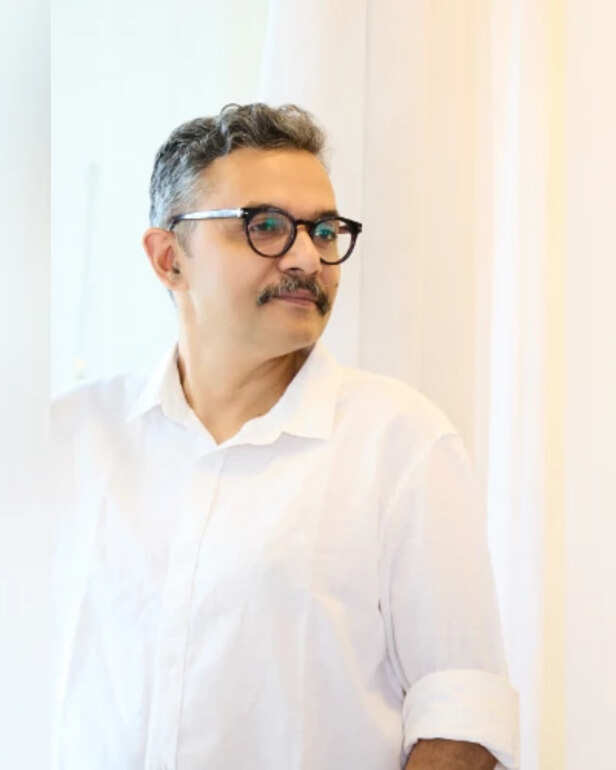
Photoshoot by Seema Chaubey
Bolo Na Tum Zara – Fight Club: Members Only (2006)
Love, Memory, and Pop Culture (2009–2013)
Neelesh Misra’s versatility as a lyricist became increasingly evident as he moved across genres.
Gulon Mein Rang Bhare – Sikandar (2009), a modern reinterpretation of Faiz Ahmed Faiz’s poetry, handled with reverence and restraint.
I Am in Love – Once Upon A Time in Mumbai (2010)
Anjaana Anjaani Ki Kahani – Anjaana Anjaani (2010)
In 2011, his songs became part of everyday listening across India:
Abhi Kuch Dinon Se – Dil Toh Baccha Hai Ji (2011)
Humko Pyaar Hua – Ready (2011)
I Love You – Bodyguard (2011)
These tracks balanced accessibility with emotional sincerity — never losing their conversational tone.
Scale Without Losing Soul (2012–2015)
Even within large-scale commercial cinema, Neelesh Misra’s lyrics retained emotional grounding.
Dil Mera Muft Ka – Agent Vinod (2012)
Khudaaya – Shanghai (2012)
Banjaara – Ek Tha Tiger (2012)
A defining song of longing and emotional rootlessness — one that resonated far beyond the film.
Kyon – Barfi! (2012)
A rare example of philosophical reflection in a mainstream soundtrack.
In Chashme Badoor (2013), his writing shifted tone with ease
Dhichkyaaon Doom Doom – Chashme Badoor (2013)
Ishq Mohallah – Chashme Badoor (2013)
Followed by high-energy, character-driven writing:
Aala Re Aala – Shootout at Wadala (2013)
Capuchino – I, Me Aur Main (2013)
Zindagi (Reprise) – Bajrangi Bhaijaan (2015)
A reflective pause within a large emotional narrative — reaffirming his ability to bring stillness into scale.
Newer Voices, Same Core (2017–2025)
As Hindi cinema evolved, Neelesh Misra’s lyrics aged with grace — remaining relevant without chasing trends.
Jhumritalaiyya – Jagga Jasoos (2017)
Playful, nostalgic, and linguistically rich — a celebration of language itself.
In Pagglait (2021), his writing returned to emotional interiority:
Phire Faqeera – Pagglait (2021)
Thode Kam Ajnabi – Pagglait (2021)
Recent work continues this trajectory:
Eeja (2025)
Mann Ye Mera – Metro… In Dino (2025)
These songs reflect the themes of love, sorrow, distance, acceptance, and emotional honesty, written with restraint rather than urgency.
- A Lyricist Who Listens
For him, a song is simply another way of telling a story.
One that begins before the music starts — and stays long after it ends.
Entrepreneurship: Building Institutions, Not Just Platforms
For Neelesh Misra, entrepreneurship was never about disruption or scale alone. It emerged organically — from a growing discomfort with speed, noise, and surface-level engagement, and a deeper desire to build spaces that allowed people, stories, and communities to breathe.
His entrepreneurial journey is best understood not as business expansion, but as institution-building rooted in values. Each initiative he has founded answers a simple question: What is missing from our public conversation?
Gaon Connection : Journalism That Starts from the Village
At a time when Indian media overwhelmingly looked at villages from urban studios, Gaon Connection reversed the lens. It was launched from Kunaura village near Lucknow, not Delhi or Mumbai, and was formally inaugurated by then Uttar Pradesh Chief Minister Akhilesh Yadav.
The idea was radical in its simplicity:
tell India’s rural stories from within rural India.
Gaon Connection reports on:
- Agriculture and farmers’ livelihoods
- Health and nutrition
- Climate change and environmental impact
- Rural employment and migration
- Education, sanitation, and governance
- Grassroots innovation and resilience
Over the years, Gaon Connection has grown into a trusted voice for rural India — cited by policymakers, researchers, and institutions — while remaining grounded in everyday village life.
For Neelesh Misra, Gaon Connection is not just a media organisation. It is a correction.
- The Slow Interview: Creating Space for Thought
Designed as a response to hurried, headline-driven conversations, The Slow Interview deliberately rejected time limits, viral hooks, and promotional agendas. Conversations were allowed to unfold at their own pace — often lasting over an hour — focusing on process, failure, self-doubt, craft, and inner life.
Guests included actors, writers, musicians, filmmakers, entrepreneurs, and thinkers — but the spotlight remained firmly on journeys rather than achievements.
The Slow Interview quickly became known for its depth and honesty, offering audiences something increasingly rare: listening without interruption.
Over time, individual initiatives began to cohere into a larger ecosystem — The Slow Movement, founded by Neelesh Misra.
The Slow Movement is not a brand; it is a worldview. It challenges the idea that faster is always better, and asks what we lose when speed becomes default.
The ecosystem includes:
- Slow Content
Long-form storytelling across video, audio, interviews, and essays — prioritising depth over frequency.
Slow Journalism
Anchored by Gaon Connection, focused on accuracy, empathy, and ground reporting.
- Slow Imprint
A publishing initiative supporting books rooted in lived experience, reflection, and memory. Some notable publications include Gaon Se Bees Postcards by Dr. Shiv Balak Misra, Neelesh Misra’s father — bringing the family’s philosophy of return and responsibility full circle and Neelesh's first poetry book— Main Aksar Sochta Hoon.
- Slow Bazaar: The home of the handcrafted
An ethical commerce initiative supporting artisans, craftspeople, and small producers — foregrounding dignity, fair value, and sustainability over mass production.
- Slow Experiences
Cafés, homestays, travel, and community spaces designed to encourage presence, conversation, and connection — experiences that resist consumption as spectacle.
Building with Patience
What distinguishes Neelesh Misra as an entrepreneur is his refusal to separate content from conscience.
Each initiative he has founded reflects:
- Long-term thinking over quick wins
- Listening before expansion
- Responsibility to communities, not just audiences
- Entrepreneurship as Storytelling
a coherent life’s work.
His ventures do not compete with one another. They speak to each other. Each tells a different chapter of the same story — one that values slowness, dignity, and attention in a world constantly rushing past.
The Story, Still Unfolding
Neelesh Misra’s life does not move in straight lines. It moves in circles — returning, again and again, to listening.
Before he became India’s most loved storyteller, he was already telling stories — through reporting from war zones, through songs that spoke of heartbreak and hope, through silences held carefully in conversation. Journalism taught him to look closely. Music taught him to feel deeply. Radio taught him to pause. And entrepreneurship taught him how to build spaces where all of this could live together.
Whether it was reporting from Kargil, documenting the terror of 173 hours inside a hijacked aircraft, giving voice to forgotten villages through Gaon Connection, or creating the imagined lanes of Yaad Sheher on BIG FM’s Yaadon Ka Idiot Box, his work has always returned to the same belief:
stories matter most when they come from honesty, patience, and care.
He has never chased trends. Instead, he has built institutions of trust — in journalism, in storytelling, in publishing, in rural enterprise. Through The Slow Interview, The Slow Movement, Slow Imprint, Slow Bazaar, and Slow Experiences, he has quietly questioned the speed at which the world now consumes meaning.
At the centre of it all is a man who listens more than he speaks.
A storyteller who knows that the most powerful stories are often whispered.
A journalist who believes that the margins are the centre.
A lyricist whose words feel personal even when sung by millions.
An entrepreneur who builds not to scale fast, but to last.
Neelesh Misra’s work cannot be contained in a single medium — because it is not about medium at all. It is about attention. About staying with a moment a little longer. About remembering where we come from. About slowing down enough to feel.
And perhaps that is why, even after decades of work across fields, his story still feels unfinished.
Because some journeys aren’t meant to conclude.
They are meant to be lived — slowly, honestly, and together.