
When we talk of Goa, we only talk of its beauty. The beaches, the food, the parties and the vibes. Freedom for today’s youth is often related to that one Goa trip with friends!
But was it always like this for Goans? Was the freedom that we all associate with Goa, always so easily theirs?
India woke up to freedom in 1947.
Goa did not.
For fourteen long years after the rest of the country breathed free, Goa remained under Portuguese rule. Quiet, waiting and almost forgotten.
Goa Liberation Day, observed on 19 December, is not just a date on the calendar. It is a reminder that freedom does not always arrive as a whole and yet, when it does, it reshapes identity, memory and the feeling of belonging just as deeply.
While the rest of India was building a new nation under its driven leaders, Goa lived in a strange in-between. Portuguese flags still flew, European laws still governed daily life and speaking against the regime came at a cost. The idea of freedom existed but at a distance, like a tide visible from the shore but not yet touching the land.
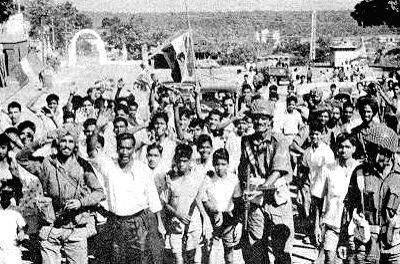
Long before tanks rolled in and flags changed, freedom entered Goa quietly. In the form of a man who chose arrest over silence.
In 1946, Ram Manohar Lohia arrived in the Portuguese-ruled Goa. At a time when speaking of independence was still a crime, he spoke of civil liberties, of the right to speak, assemble and dissent. Words that unsettled a regime more deeply than weapons ever could. His arrest triggered the first organised civil disobedience movement in Goa, breaking the illusion that Portuguese rule was unquestioned. Lohia did not liberate Goa that day, but he did something equally powerful: he reminded Goans that fear could be unlearned, and that freedom begins the moment silence ends.
Alongside this awakening, Goans themselves were already preparing for a long, uncertain struggle. Leaders like Dr. Julião Menezes, Purushottam Kakodkar, T. B. Cunha, and Vaman Varde Valaulikar (Shenoi Goembab) became quiet torchbearers of resistance. Some wrote fiercely, some organised secretly, others endured prison and exile. Many Goans crossed into neighbouring Indian territories, setting up underground networks, spreading nationalist ideas, and keeping the dream of liberation alive. Their resistance did not erupt in loud revolutions but grew steadily, through sacrifice, patience and an unwavering belief that Goa’s identity could not remain colonised forever.
Resistance, however, was never absent. It was just quieter, slower and more deeply rooted. Goan freedom fighters organised underground movements, faced imprisonment, censorship and long exiles. Many crossed borders into neighbouring Indian territories, carrying with them stories, pamphlets and hope. Their struggle rarely ever makes it to the popular memories of freedom. But it continues to live in homes, whispers and songs.
For Portugal, Goa was not a colony to be relinquished easily. It was portrayed as an “overseas province,” a claim that delayed negotiations and hardened control.
For Goans, this meant years of political suppression with limited civil liberties, controlled press and fear stitched into their everyday lives.
By the late 1950s, the pressure had begun to intensify. Protests grew, satyagrahas multiplied and the demand for liberation became impossible to dismiss. What began as whispered dissent had turned into collective insistence. Goa’s struggle was no longer invisible. It had gathered moral force, public support and national attention — waiting only for a decisive moment to end a rule that had lasted over four centuries.
When diplomacy failed, action followed.
In the winters of December 1961, the Indian government launched the ‘Operation Vijay’, a military intervention that lasted just about 36 hours but gifted something very precious. On the 19th of December, the Portuguese forces had surrendered.
Goa, along with Daman and Diu, finally tasted freedom.
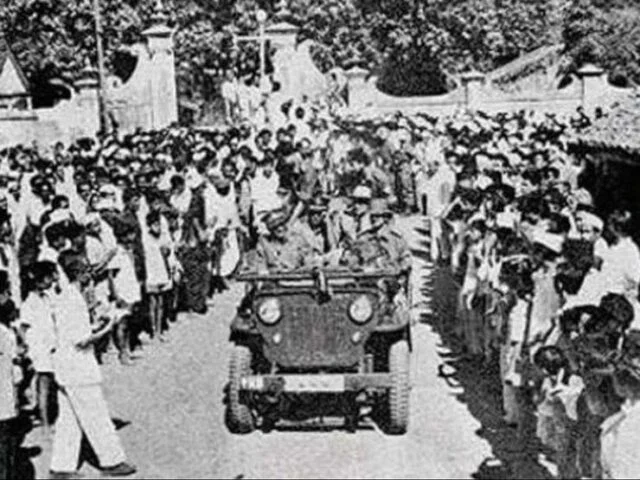
(Operation Vijay)
It was swift. It was decisive. And for Goa, it was transformational.
Liberation was not merely about the lowering of one flag and the raising of another. It was about reclaiming voice… The right to speak freely, to choose representatives, to belong fully to the idea of India. To be Indians with pride!
Over time, Goa negotiated its place carefully, preserving its language, culture and its unique identity while beautifully becoming the part of a larger nation.
Today, we often speak of Goa through its beaches, music and tourism. But beneath that easy imagery lies a history of waiting, resilience and delayed freedom.
Goa Liberation Day asks us to pause and remember that independence was not a single moment for everyone. It was rather staggered, uneven and deeply personal to each state… To all the citizens.
It reminds us that freedom is not just won once.
It is recognised, remembered, and respected every year.
And perhaps that is why Goa Liberation Day matters.
Not because it came late, but because it teaches us that freedom, whenever it arrives, must never be taken for granted.
Wishing you all this day of freedom and liberation!